The Heat and Health Benefits of Akabare Chilies

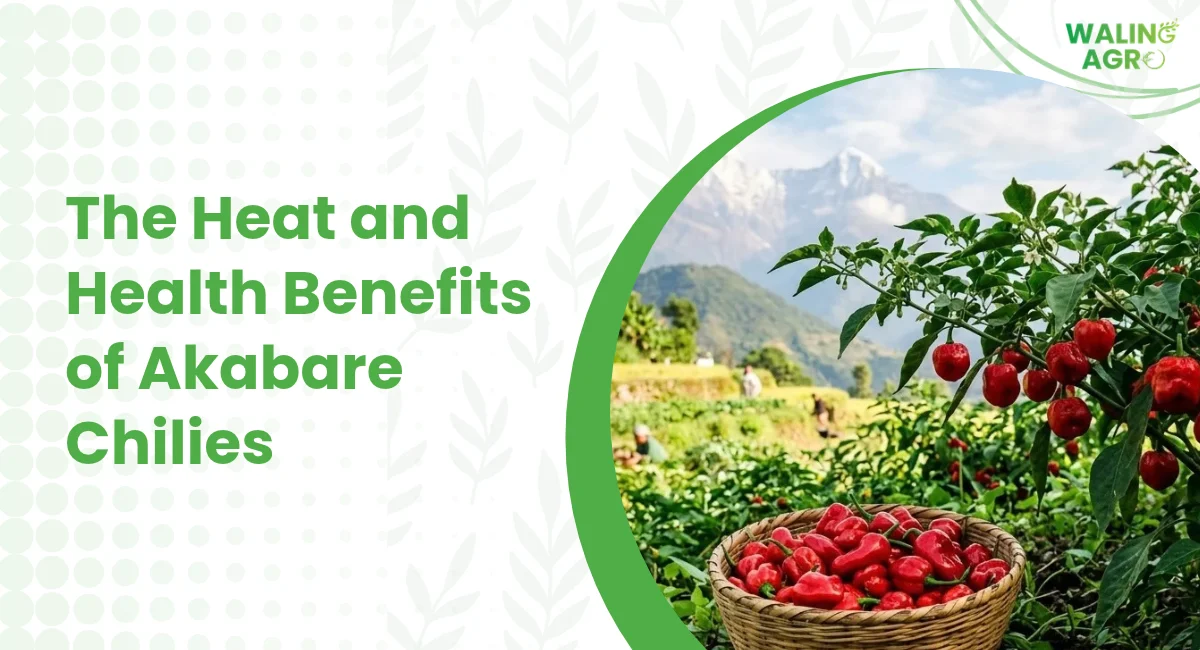
Akabare chilies have warmed Nepali kitchens and bodies for generations. Hidden inside these small, crimson peppers lies a nutritional profile so dense that modern research is only now catching up to what traditional Nepali kitchens have always known.
Grown across the mid-hill regions and Terai lowlands, this chili has been a staple of Nepali cuisine and traditional healing practices for centuries. Today, as global demand for authentic, nutrient-rich superfoods grows, Akabare is moving from local markets into the international spotlight.
At Waling Agro, we cultivate and process Akabare chilies with the same rigorous standards we apply to every crop. In this blog, we walk you through why this humble Himalayan chili deserves a place in your diet, what happens inside your body when you eat it, and how we preserve every nutrient from harvest to your table.
Why Akabare Chilies Matter More than You Think
A peer-reviewed study of six chili cultivars grown in Nepal found that Akabare ranked as the best cultivar for flavonoid, polyphenol, beta-carotene, and total carotenoid content, the key bioactive compounds responsible for antioxidant and health benefits. Akabare chilies pack a remarkable concentration of beneficial compounds into a small package.
Akabare chilies are smaller and more potent than common red chilies. This concentration of compounds results from the growing conditions, altitude, and soil composition unique to the Himalayan foothills where this variety thrives. The challenging terrain and climate of Nepal’s mid-hill regions produce a chili that is distinctly different from its larger, milder cousins grown in warmer, lower-altitude regions.
What Makes Akabare Different from Other Chilies?
Unlike milder varieties bred for volume, Akabare chilies prioritize nutritional density over size. The result is a chili that packs more active compounds into a smaller package, making every gram count.
Akabare chilies contain a unique balance of bioactive compounds:
- Capsaicin and dihydrocapsaicinoids: the heat compounds linked to improved metabolism, pain relief, and anti-inflammatory effects
- Vitamin C: levels comparable to citrus fruits, supporting immune function and collagen synthesis
- Carotenoids (beta-carotene, lutein): powerful antioxidants that protect eye and cardiovascular health
- Flavonoids and phenolic acids: compounds that reduce oxidative stress throughout the body
- Vitamin A, Vitamin E, and Potassium: essential micronutrients for vision, skin health, and heart function
The Health Benefits: What the Research Shows
1. Metabolic Support
Capsaicin, the compound that gives Akabare its heat, has long been used in traditional medicine to support metabolic function. This is one reason Akabare chilies have remained central to Nepali cuisine and wellness practices for generations.
2. Traditional Anti-Inflammatory Use
Capsaicin is known to work as a natural analgesic. This is why capsaicin-based creams are used for joint and muscle discomfort, and why Akabare chilies have been used in traditional Nepali medicine for similar purposes when consumed.
3. Nutritional Richness
Akabare chilies contain adequate amounts of Vitamin C, carotenoids, and flavonoids, compounds recognized for their antioxidant properties. Together, they support overall health and resilience.
4. Immune Support
The high Vitamin C content in Akabare chilies supports immune function. When combined with antioxidant compounds, they provide concentrated nutritional support in small quantities.
5. Digestive Wellness
Contrary to the reputation of spicy foods for causing digestive upset, capsaicin stimulates digestive secretions and gut movement. This is why traditional Nepali medicine has long used chilies to support healthy digestion, a practice grounded in real physiological effects.
What You Get from Akabare Chilies
Research reveals that while fresh chilies are high in vitamin C, dried chilies undergo a dramatic transformation. Vitamin A increases by 100 times upon drying, while oleoresin and dry matter content also increase significantly. This concentration of compounds explains why a small pinch of dried Akabare powder delivers more active bioactive compounds than a handful of fresh chilies.
Because Akabare chilies are typically consumed in small quantities as a condiment or spice, their value comes from density rather than volume. A single Akabare chili delivers meaningful amounts of:
- Vitamin C: supporting immune function and collagen synthesis
- Carotenoids: powerful antioxidants for eye and cardiovascular health
- Potassium and Manganese: essential minerals for heart and metabolic function
- Capsaicin: the bioactive compound responsible for heat and traditional wellness properties
- Flavonoids and Phenolic Acids: compounds recognized for their antioxidant activity
How We Grow and Process Akabare Chilies
Every batch of Waling Agro Akabare chilies passes through carefully managed stages, from farm to dried form. Unlike mass-produced chilies, we prioritize plant health and nutrient retention over volume.
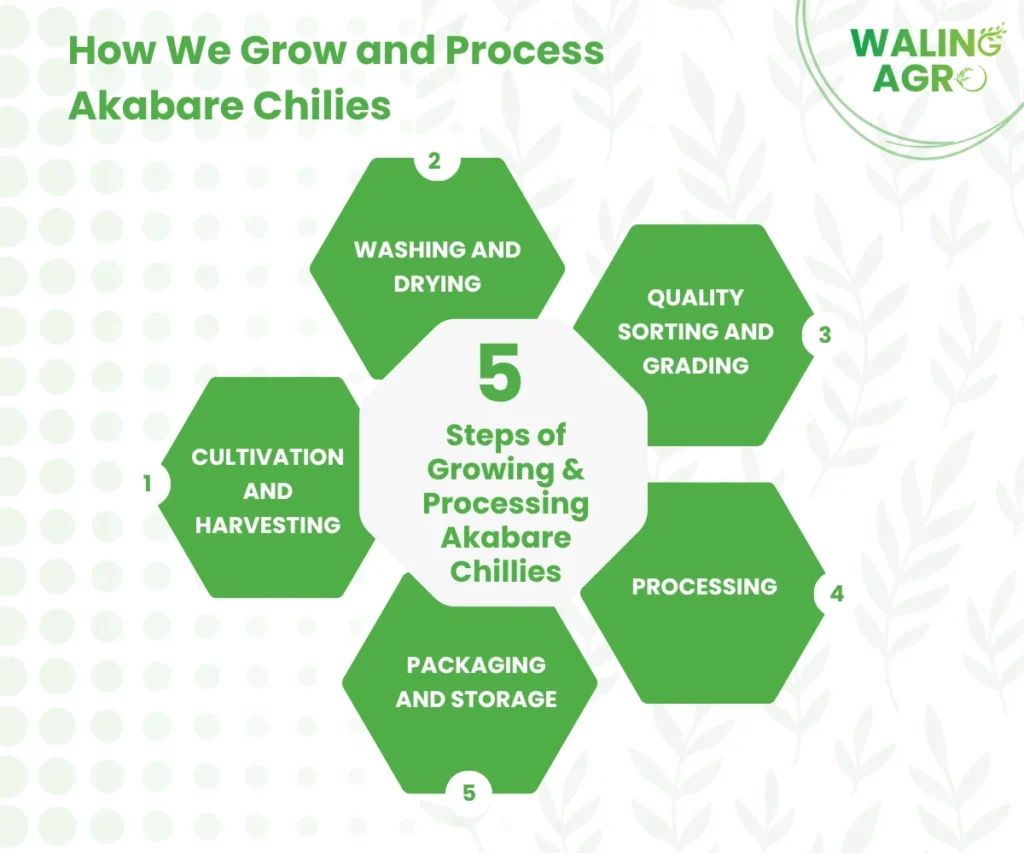
Step 1: Cultivation and Harvesting
Quality begins in the soil. Our Akabare chilies are grown in the mid-hill regions of Nepal, where altitude (800–1,400 meters), rainfall, and temperature create ideal conditions for capsaicin concentration.
- Only chilies that reach full maturity and deep crimson color are harvested
- Hand-harvesting preserves the chili’s skin and prevents bruising
- Harvested chilies are photographed and logged by collection date and field source
- Yellowing or blemished fruit is excluded at the source
Step 2: Washing and Drying
Once harvested, we will wash chilies in clean, potable water to remove field dust and insects. We then spread them on mesh screens in our solar dryer, allowing consistent airflow and moderate heat.
- We use solar drying rather than high-heat mechanical drying to preserve the delicate compounds in each chili
- Chilies are considered fully dry once they are brittle and darken to a deep burgundy
- Drying takes 7–10 days depending on weather and chili size
- Moisture content is tested to ensure optimal preservation and shelf stability
Step 3: Quality Sorting and Grading
Dried chilies are hand-sorted to remove any that failed to dry properly or show signs of mold.
- Only premium-grade chilies proceed to processing
- Substandard fruit is separated and never reaches packaging
- Each batch is graded for color, size, and moisture content
Step 4: Processing (Whole, Ground, or Flaked)
Akabare chilies are available in three forms, each processed to preserve maximum nutritional value:
- Whole dried chilies are stored whole in airtight containers to maintain all volatile compounds
- Ground chili powder are dried chilies are ground into fine powder using sterilized equipment; powder is sieved to remove any coarse fibers
- Chili flakes are coarsely crushed for easy use in cooking
Step 5: Packaging and Storage
The finished product is moisture-sensitive and light-sensitive, so packaging happens immediately.
- Chilies are transferred into airtight, opaque containers
- Metalized pouches or dark glass jars block light exposure that would degrade Vitamin C and carotenoids
- Packaged chilies are stored in a cool, dry place away from direct light and humidity
Documentation at Every Stage
As with our moringa powder and ginger production, we photograph and document every batch of Akabare chilies from harvest through packaging. This traceability standard means every pouch of Akabare we sell can be traced back to its source field and harvest date.
Quality Control: Non-Negotiable Standards
Before any batch of Akabare is approved for packaging, it is checked against strict criteria:
- Potency: verified to meet minimum standards for capsaicin content (both fresh and dried forms)
- Moisture content: tested to ensure optimal preservation and shelf stability
- Microbial safety: batches are screened for harmful pathogens
- Appearance and color: consistent deep red/burgundy color indicates maturity and quality
- Aroma and flavor profile: tested to confirm authentic Akabare characteristics
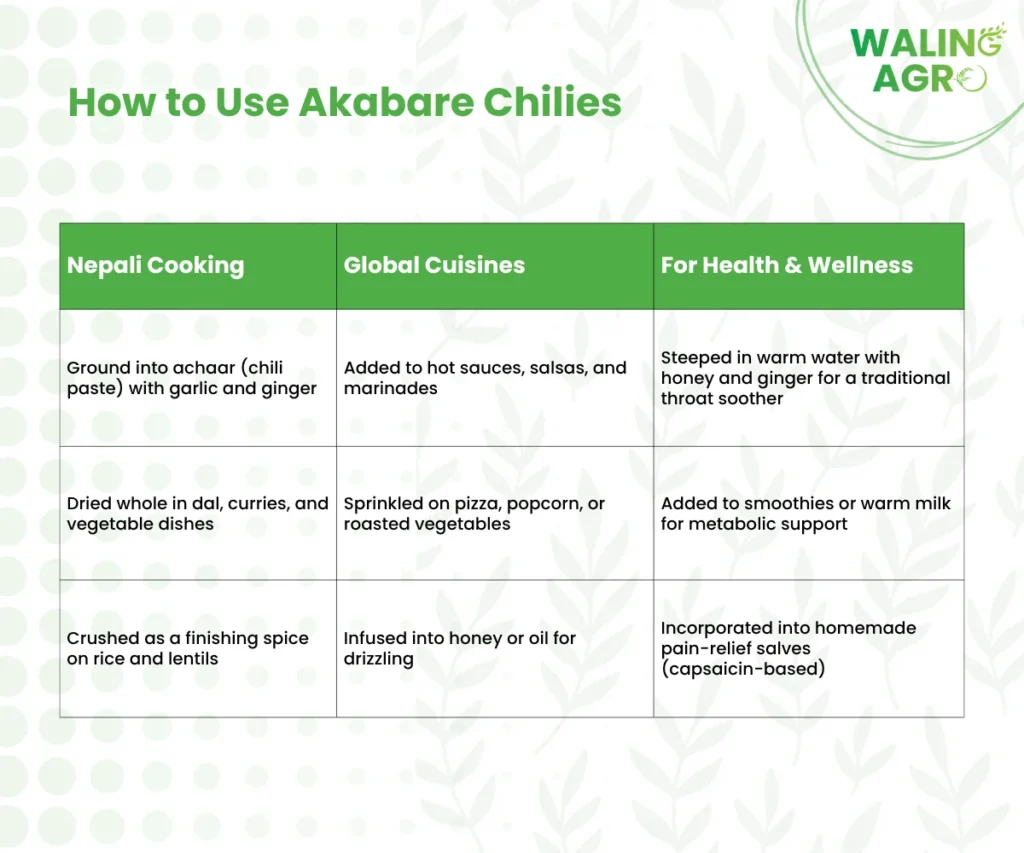
How to Use Akabare Chilies
One reason Akabare chilies have endured for centuries is their versatility. Unlike some ingredients that work in only one context, these chilies fit seamlessly into everyday cooking and wellness routines.
Akabare Chilies: From Kitchen Garden to Global Demand
Akabare chili had a domestic market value of 1.385 billion Nepalese rupees in 2021, and farmers commanding 36–53% premium prices compared to common chili varieties report a remarkable 189% gross profit margin, showing why Akabare is rapidly becoming Nepal’s most valuable specialty chili export.
What began as a Himalayan kitchen staple is now recognized globally for its nutritional power and authentic flavor. As demand for natural, traceable, nutrient-dense foods grows, Akabare chilies are finally getting the international recognition they deserve.
Ready to Try Waling Agro Akabare Chilies?
You now know exactly how we grow and process our Akabare chilies. We document every stage, trace every batch, and make every decision to preserve the compounds that make this chili worth cultivating in the first place.
If you are interested in wholesale or bulk supply, we would love to hear from you. Reach out to our team, and we will get back to you promptly.