Why Allicin is the Real Reason Garlic Heals

Garlic has been called a natural medicine for thousands of years, used everywhere from ancient Egypt to traditional Ayurveda. But modern science has narrowed that reputation down to one specific molecule: Allicin. Global garlic output reached roughly 110+ million tonnes in 2026, and a large share of that crop is grown, dried, and traded for one reason: the bioactive compound it produces the moment a clove is crushed.
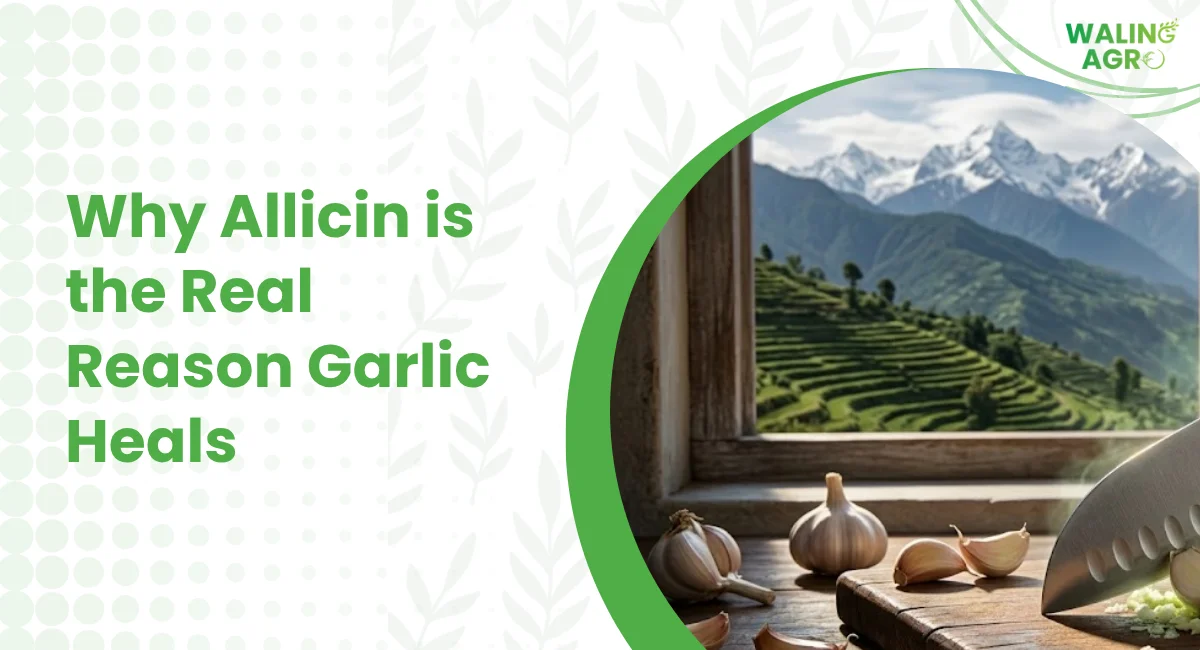
At Waling Agro, we process garlic sourced from the high-altitude hill regions of Nepal, where cold climates and mineral-rich soil produce smaller, more pungent bulbs. Pungency in garlic is a rough proxy for sulfur compound content, the raw material Allicin is made from.
What is Allicin, Chemically Speaking?
Allicin (allyl 2-propenethiosulfinate) is an organosulfur compound that gives garlic its sharp smell and much of its biological punch. It was first isolated and described in 1944 by the chemist Chester J. Cavallito, and its molecular structure was confirmed a few years later.
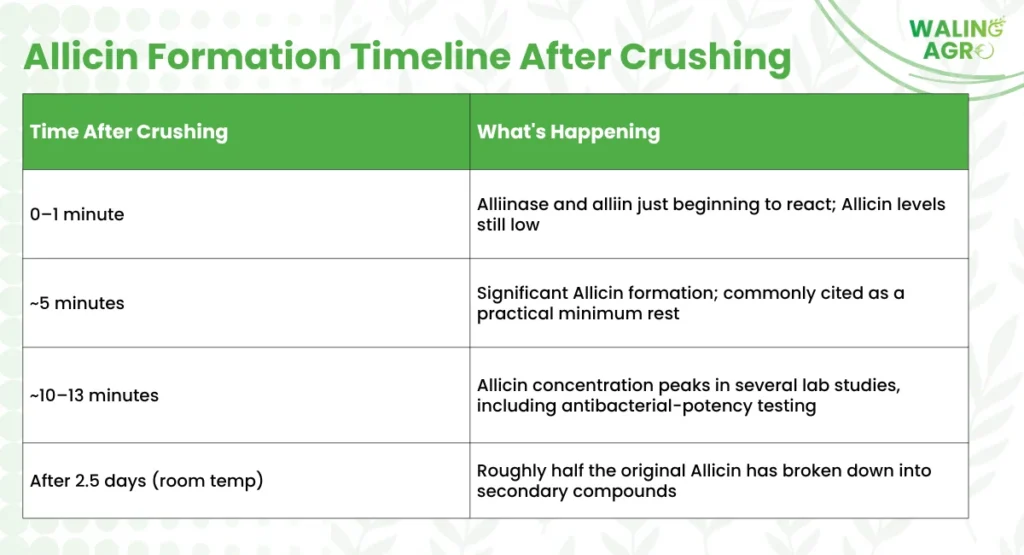
Here’s the part most people get wrong: a whole, undamaged garlic clove contains no Allicin at all. What it contains is a stable, odourless compound called Alliin. Garlic bulbs contain around 2.3% organic sulfur compounds, and alliin makes up roughly 80% of that sulfur pool. Allicin is what alliin becomes the moment the cell structure is broken.
Why Fresh Garlic Has Zero Allicin Until You Cut it
Inside an intact garlic clove, Alliin and the enzyme that activates it, Alliinase, are physically separated in different cell compartments. This is the plant’s own chemical defence system. Alliin and Alliinase only meet, and react, when the cell membranes are physically broken by cutting, crushing, or chewing.
This is why a whole garlic bulb sitting in your pantry has almost no smell, while a single crushed clove fills the kitchen instantly. The same logic applies to ginger and other rhizome spices we process at Waling Agro.
The Science: What Allicin Does Inside the Body
Allicin has been studied across cardiovascular, metabolic, antimicrobial, and even oncology-adjacent research. A 2022 review in Frontiers in Nutrition summarised that Allicin can reduce oxidative stress, inhibit inflammatory response, resist pathogen infection, regulate intestinal flora, reduce blood glucose, and protect the cardiovascular and nervous systems.
| Health Area | What the Research Found | Source |
| Heart & Cholesterol | A meta-analysis found garlic significantly improved total cholesterol (-10.21 mg/dL), LDL (-5.90 mg/dL), and HDL (+2.18 mg/dL) | PubMed, 2025/2026 |
| Blood Pressure | Same meta-analysis: systolic BP fell by 3.71 mmHg and diastolic BP fell by 1.97 mmHg on average | PubMed |
| Blood Sugar | NIH states garlic supplements may reduce blood sugar to a small extent in people with diabetes | NIH NCCIH |
| Inflammation | C-reactive protein fell by 1.6 mg/L and TNF-α fell by 3.94 pg/mL in the pooled trial data | PubMed |
| Antimicrobial | Allicin shows antibiotic activity against a wide range of Gram-negative and Gram-positive bacteria, fungi, and parasites | USPTO research filing |
Cancer Research | Documented anti-proliferative activity across gastric, hepatic, breast, lung, and colon cancer cell studies | NIH / PMC |
How to Maximise Allicin at Home
Because Allicin only forms after cell damage, and degrades quickly afterward, timing and method both matter. Independent food science research gives a fairly consistent picture:
- Crush, don’t slice, a garlic press or the flat of a knife blade causes more cell disruption than slicing, releasing more alliinase and producing more Allicin.
- Let it rest before cooking. A ScienceDirect study found Allicin concentration was still low at the moment of cutting and needed about 10 minutes for the enzymatic reaction to fully develop.
- Don’t rush it into heat. A widely cited 1999 study found that microwaving freshly crushed garlic immediately destroyed its anticarcinogenic activity in animal trials, while a 10-minute rest before heating preserved much of it. Heat denatures the alliinase enzyme before it can finish its job.
- Keep heat moderate, Allicin itself begins breaking down above roughly 140°F (60°C), so very high, prolonged heat reduces Allicin yield even after it has formed.
- Avoid the blender for raw prep. Blending generates localised heat that can denature alliinase faster than a knife or press.
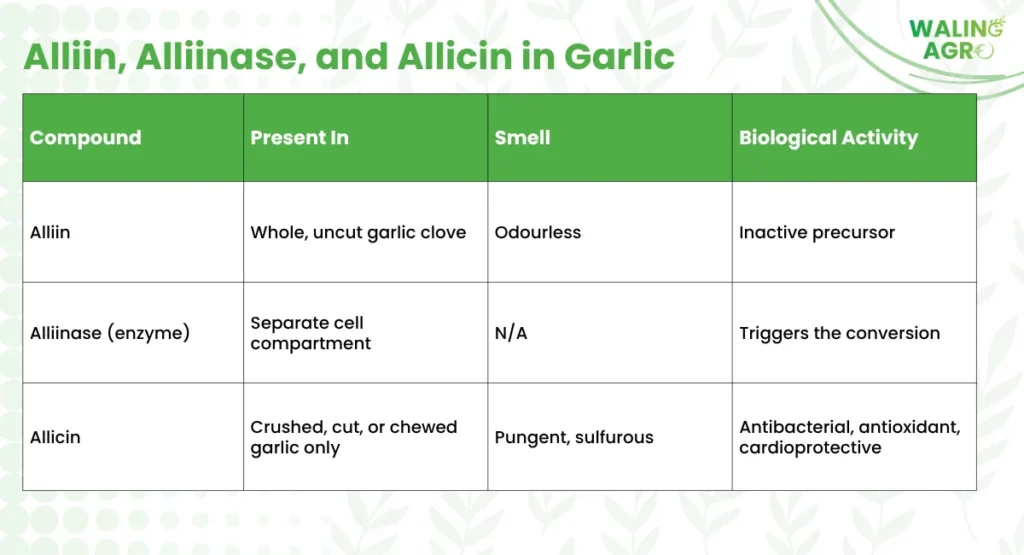
One controlled study testing Allicin’s effect on Bacillus cereus found maximum antibacterial activity when garlic rested for roughly 12.9 to 15 minutes after chopping before use, reinforcing that the often-repeated “5 minute rule” may actually undersell the optimal wait.
Why Processing Method Matters for Garlic Powder
Commercial garlic powder presents a real challenge: the drying process that turns fresh cloves into shelf-stable powder also exposes the alliin-alliinase system to heat. Various industrial drying methods decrease levels of bioactive constituents like Allicin, total phenols, and pyruvate compared to freshly harvested garlic.
This is exactly why processing conditions, not just the raw bulb, determine the quality of a finished garlic product. The same principle applies across our turmeric processing, where the active compound curcumin is similarly heat- and light-sensitive. Lower-temperature drying and minimal processing time generally preserve more of a spice’s original bioactive profile, whether the compound in question is Allicin, curcumin, or gingerol.
How Waling Agro Preserves Allicin Potential
Our garlic is grown in the high-altitude hill regions of Nepal, where a cold climate and mineral-rich soil produce bulbs that are smaller in size but immensely more potent. Smaller cloves generally pack a higher concentration of sulfur compounds relative to their water content, which is the raw material Allicin formation depends on.
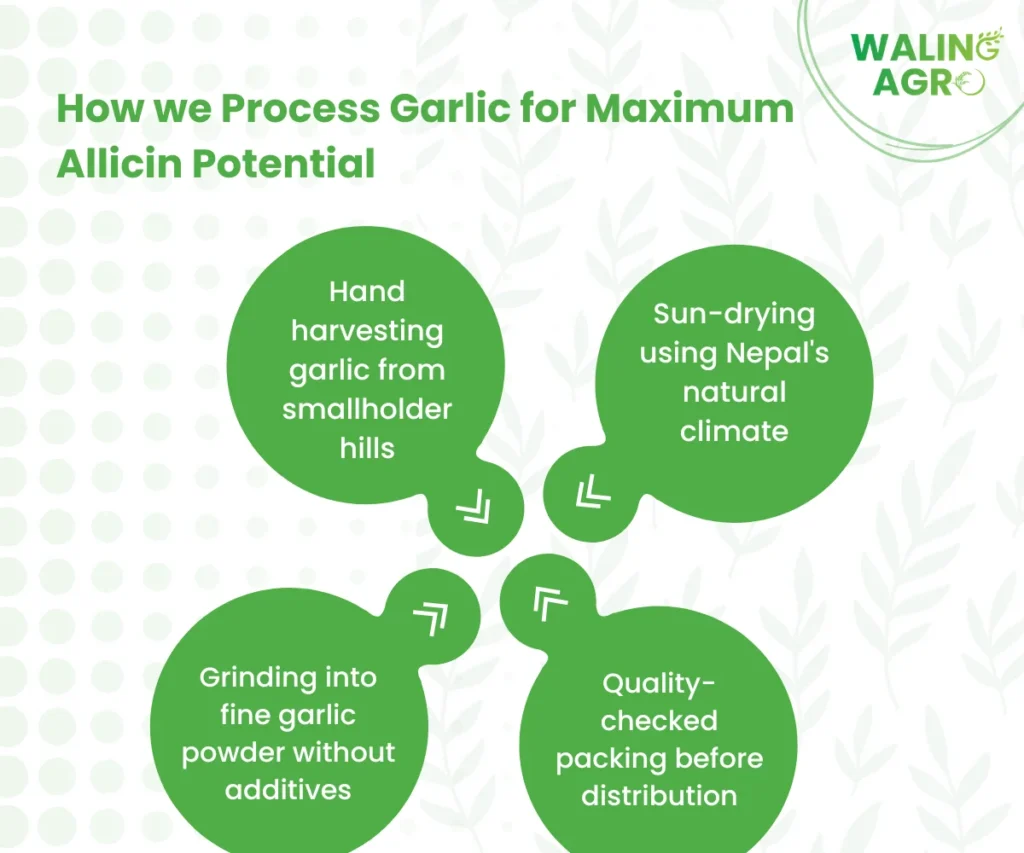
We offer garlic as whole cured bulbs, peeled and dehydrated cloves, or fine garlic powder. See our full product range, including black cardamom and moringa, or read how we process ginger powder using the same care-first approach.
Conclusion
Garlic’s reputation as a healing food comes from what happens in the seconds after you crush, chop, or chew it, when alliin meets alliinase and Allicin is produced. That single, unstable reaction explains garlic’s smell, its strongest antibacterial properties, and the cardiovascular and metabolic benefits documented across dozens of clinical trials.
Whether you’re cooking with fresh cloves or choosing a garlic powder for your kitchen, understanding Allicin changes how you prepare it: crush it, give it a few minutes to rest, and avoid blasting it with high heat the moment it’s cut. Explore our full range of Himalayan spices or get in touch for wholesale and sourcing enquiries.