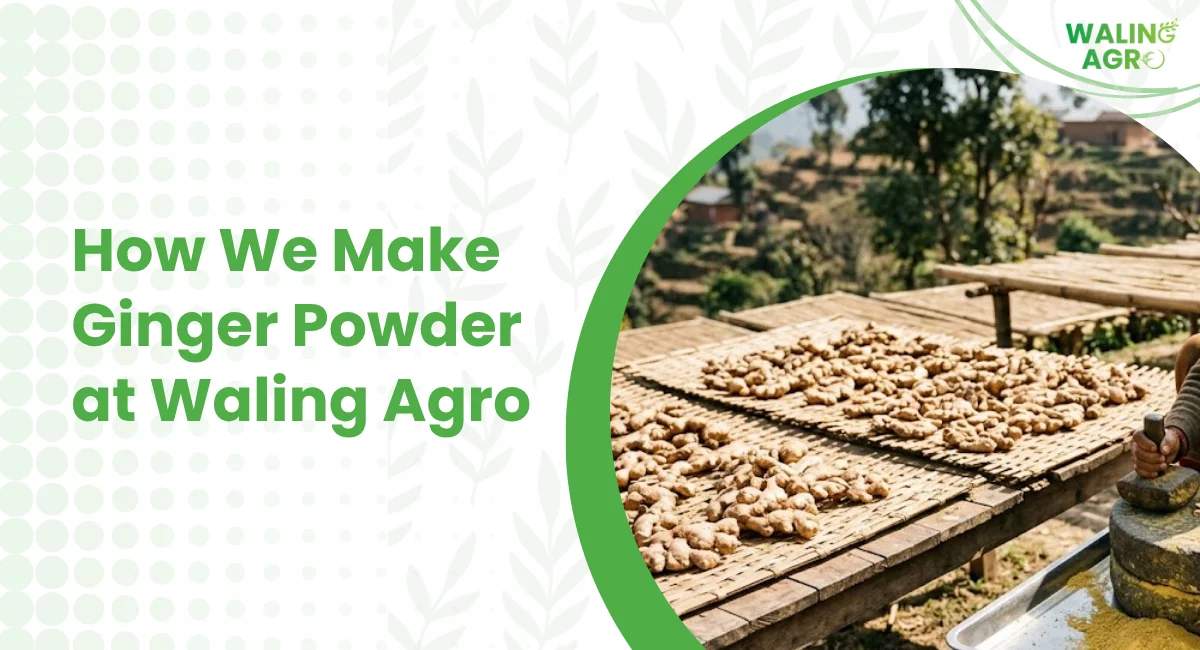
How We Make Ginger Powder at Waling Agro

Behind every packet behind Waling Agro’s product is a long, carefully managed journey. It starts from a farmer’s field in Nepali to a quality-tested, finely ground powder that ends up in kitchens of health obsessed individuals.
At Waling Agro, we believe in complete transparency. We want our customers to know exactly what they are buying, where it comes from, and how it was made. We will cover all 11 steps of our production process, explain the decisions behind each one, and share the facts and figures that give context to why Nepali ginger matters on a global scale.
Why Ginger? The Global Health & Market Boom
Ginger has been a cornerstone of Ayurvedic and traditional Chinese medicine for thousands of years, anchoring the cuisines of cultures across Asia. Today, the global demand for ginger is accelerating faster than ever. This boom is fueled by a massive consumer shift toward functional foods, clean-label ingredients, and natural health remedies.
The Global Market at a Glance
- Market Valuation: The global ginger powder market reached USD 4.01 Billion in 2024.
- Growth Trajectory: The market is projected to expand at a CAGR of 9.41% through 2030.
Why Nepal? A Global Ginger Powerhouse
Despite its small geographic size, Nepal is a heavyweight in the global spice industry. Driven by smallholder farmers, the country’s ginger production has achieved a remarkable average annual growth rate of 6.67%, thanks to highly suitable soil and microclimates.
Ginger is deeply woven into the fabric of Nepali life, serving as an everyday culinary staple, a traditional medicine, and a vital backbone for rural livelihoods.
Waling Agro: Rooted in the Story
At Waling Agro, we sit right at the intersection of this thriving global market and Nepal’s rich agricultural heritage. Operating out of our processing factory in Waling, Gandaki Province, we source raw rhizomes directly from local farming communities.
By transforming raw, freshly harvested ginger into premium, shelf-ready products, we fulfill a three-fold mission:
- Empowering Farmers: Creating sustainable economic value and fair pricing for local smallholders.
- Boosting the Economy: Generating meaningful employment opportunities within our community.
- Delivering Quality: Supplying premium ginger products to conscious consumers across Nepal and international markets.
Our 11-Step Production Process: An Overview
Every batch of our ginger powder passes through 11 carefully managed stages. Each step protects quality, reduces waste, ensures safety, and delivers a product we are proud to put our name on.
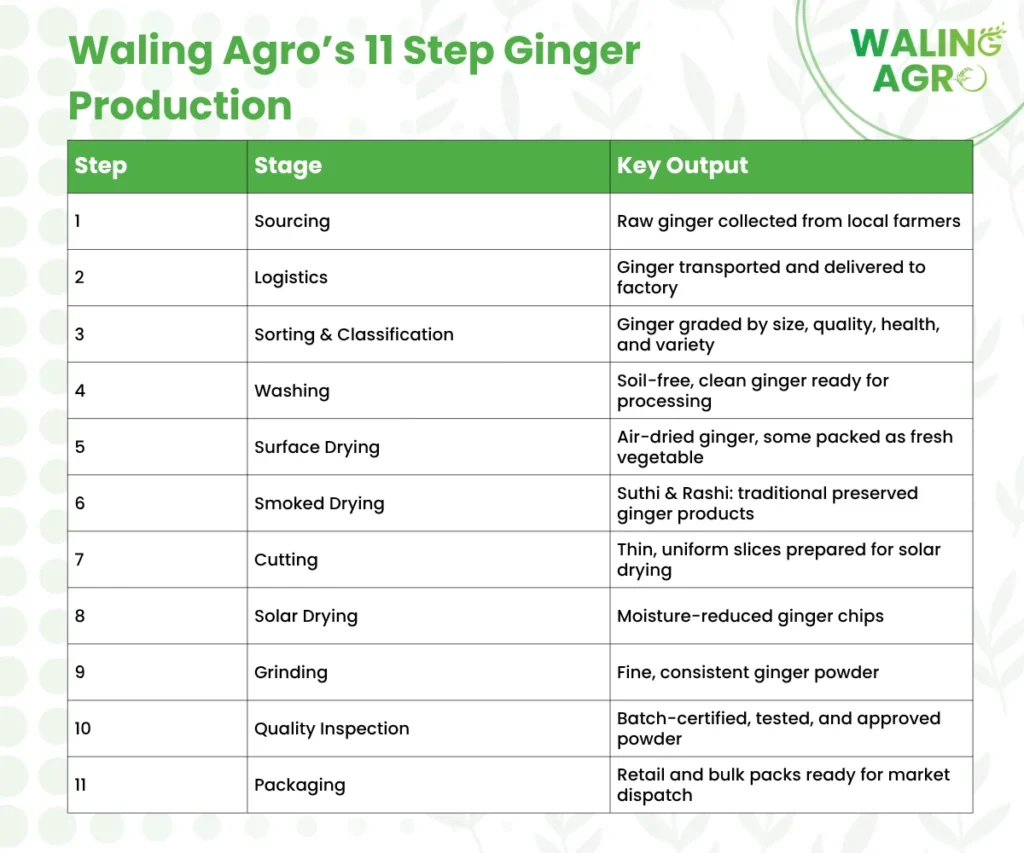
Now let us go through each step in detail.
Step 1: Sourcing
The quality of ginger powder is decided long before it reaches our machines. It is decided in the field, at harvest time. That is why we take our sourcing very seriously.
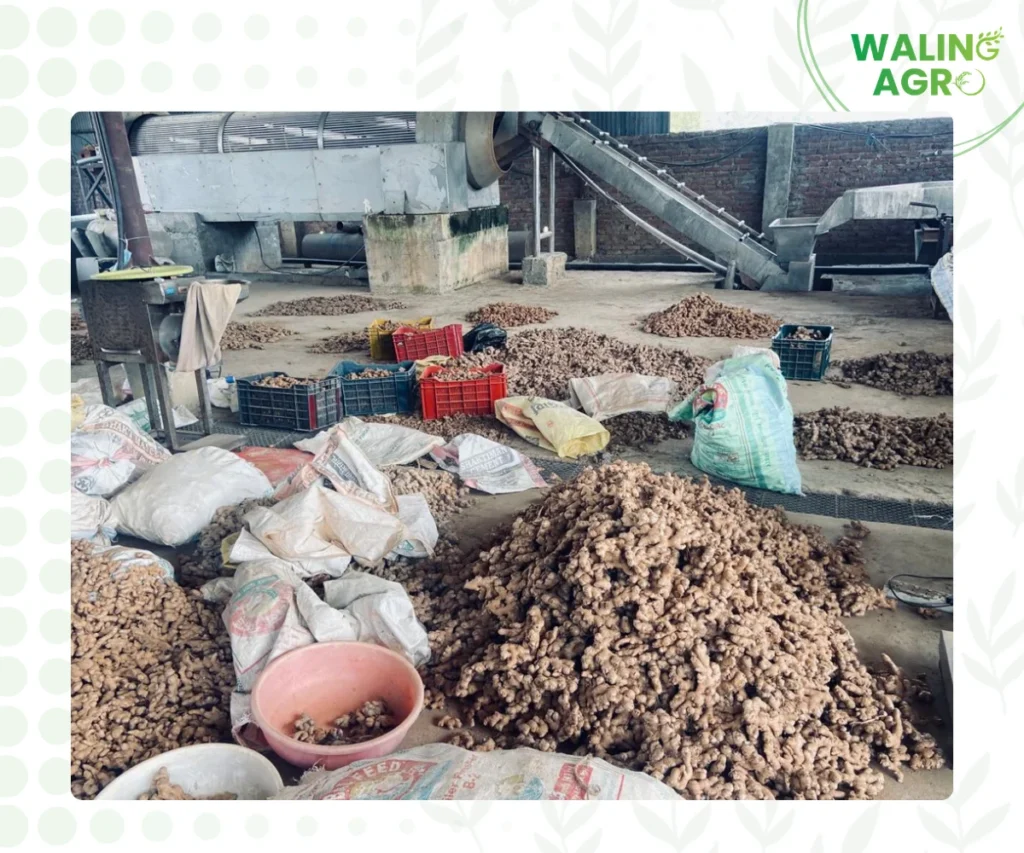
In Nepal, ginger farming is largely done by smallholder families, households who grow ginger on plots of less than a hectare, often alongside other vegetables and crops. These farmers are skilled, but they are also remote.
Here is exactly how our sourcing model works:
- Village collection runs: We send our own vehicles directly to ginger-growing villages, especially areas like Masankot where ginger cultivation is widespread. A single trip can collect ginger from dozens of households in one community.
- Voluntary factory drop-off: Farmers with smaller quantities, typically 50 to 100 kg, bring their ginger directly to our factory. Many of them are already travelling to Waling city for shopping or other errands, so delivering to us fits naturally into their trip.
- Harvest season advertising: We run announcements on social media platforms and local radio during the ginger harvest season. This lets farmers know we are buying, what prices we are offering, and where to come.
- Immediate cash payment: Every farmer is paid in full, in cash, on the spot. We do not carry over any payments as credit or delay payment to later dates. For a smallholder farmer, getting paid immediately makes a real difference.
Want to know more about the farming communities we work with? Visit our About page to learn about our story and values.
Step 2: Logistics
Once ginger is harvested, time matters. The longer it sits unharvested or unprocessed, the more moisture it loses, the more it is exposed to disease, and the more quality degrades.
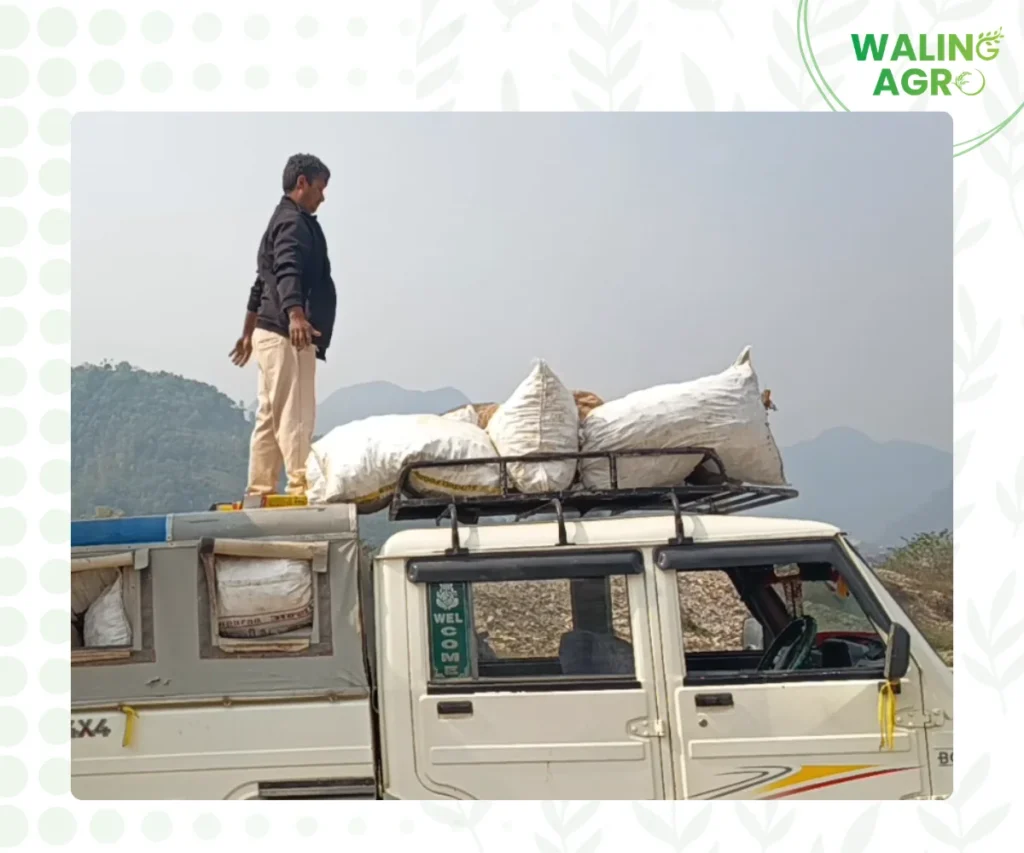
Our logistics model has two tracks depending on the type of farmer:
| Farmer Type | Volume | How They Deliver | Who Manages Logistics |
| Small / individual farmers | 50–100 kg | Bring to factory on their next city trip | Farmer manages own transport |
| Village cluster (high-volume area) | Several hundred kg per village | Our vehicle goes to the village, collects from all households, transports to factory | Waling Agri manages transport |
For villages where ginger is grown at scale, we coordinate with local community representatives to organise a collection point within the village. Farmers bring their harvested ginger to this central point, and our vehicle picks up the combined load. This reduces travel time for individual farmers and ensures we can collect larger volumes efficiently.
For smaller farmers, the system is even simpler. They load their sacks onto a vehicle they are already taking to Waling, and deliver to us on arrival. No extra trip, no extra cost.
Step 3: Sorting and Classification
When ginger arrives at our factory, it all goes to one place first: the grading centre. This is a dedicated area inside the factory where our sorting team inspects and classifies every batch.
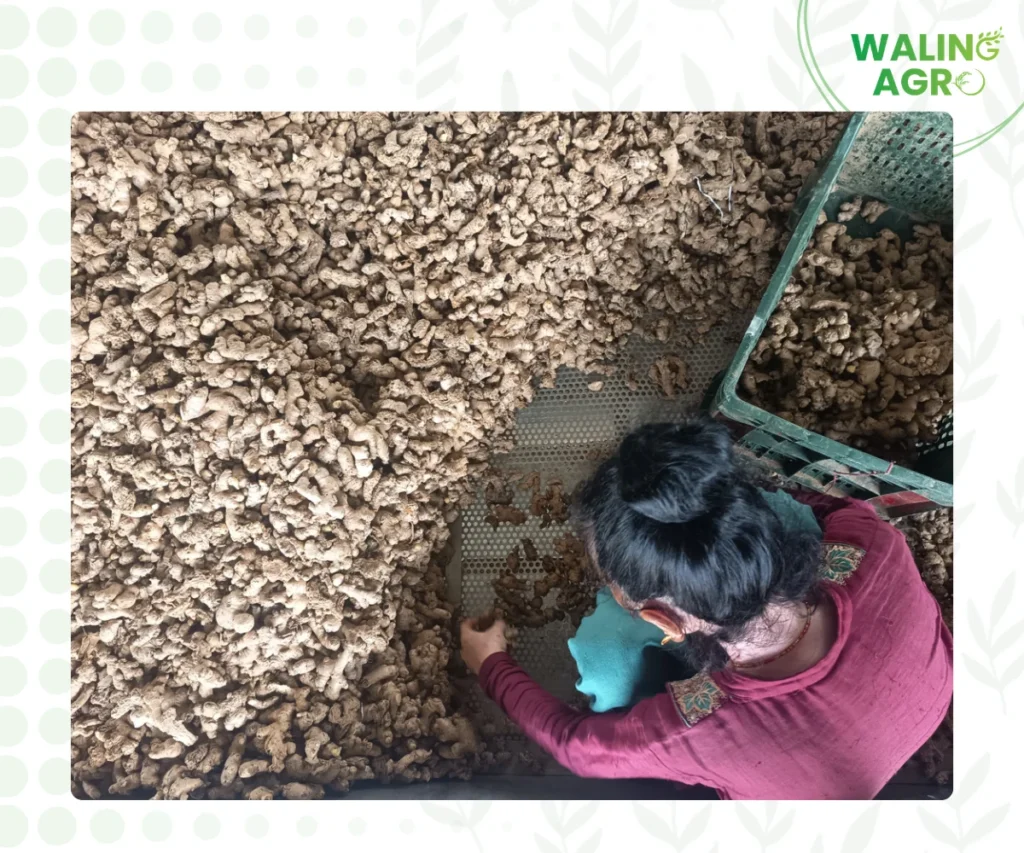
Sorting might sound simple but it is not. A trained sorter can identify disease at an early stage, distinguish between ginger varieties by appearance and smell, and make fast decisions about which processing path is right for each rhizome. This skill takes years to develop and cannot be replaced by a machine, at least not at the quality level we hold ourselves to.
We sort ginger based on five key criteria:
- Size: Larger rhizomes are more suitable for certain processing methods and command higher prices in some markets. Smaller ones may be better suited to others.
- Quality: Surface condition, firmness, and freshness are evaluated by hand and by eye. Bruised or damaged sections are noted.
- Aroma: Ginger’s aromatic compounds are what give it its value as a spice and health ingredient. Strong, fresh aroma indicates high active compound content.
- Health: Rhizome rot disease is the single biggest quality risk in Nepal’s ginger supply chain. Our sorters are trained to identify early signs of rot, bacterial infection, or fungal damage and remove affected rhizomes before they contaminate others.
- Variety: Only assessed for ginger being selected for seed stock. Variety identification ensures we maintain consistent seed quality for the next planting season.
After sorting, each batch is assigned to one of four processing paths:
| Category | Description | Where it Goes |
| Ginger Seed | Healthy rhizomes of the right variety and size | Stored and supplied to farmers for the next planting season |
| Fresh Ginger | High-quality, firm, aromatic rhizomes | Washed and packed as fresh vegetable for direct consumption |
| Smoking Grade | Good quality but suitable for extended preservation | Smoke-dried to produce Suthi and Rashi |
| Processing Grade | Sound rhizomes selected for powder production | Washed, cut, solar-dried, and ground into ginger powder |
Step 4: Washing
After sorting, ginger destined for processing heads to our washing centre. Thorough washing is non-negotiable. Soil carries bacteria and contaminants that can affect powder quality, shelf life, and food safety. We have invested in washing infrastructure that leaves absolutely no soil on the ginger when it exits.
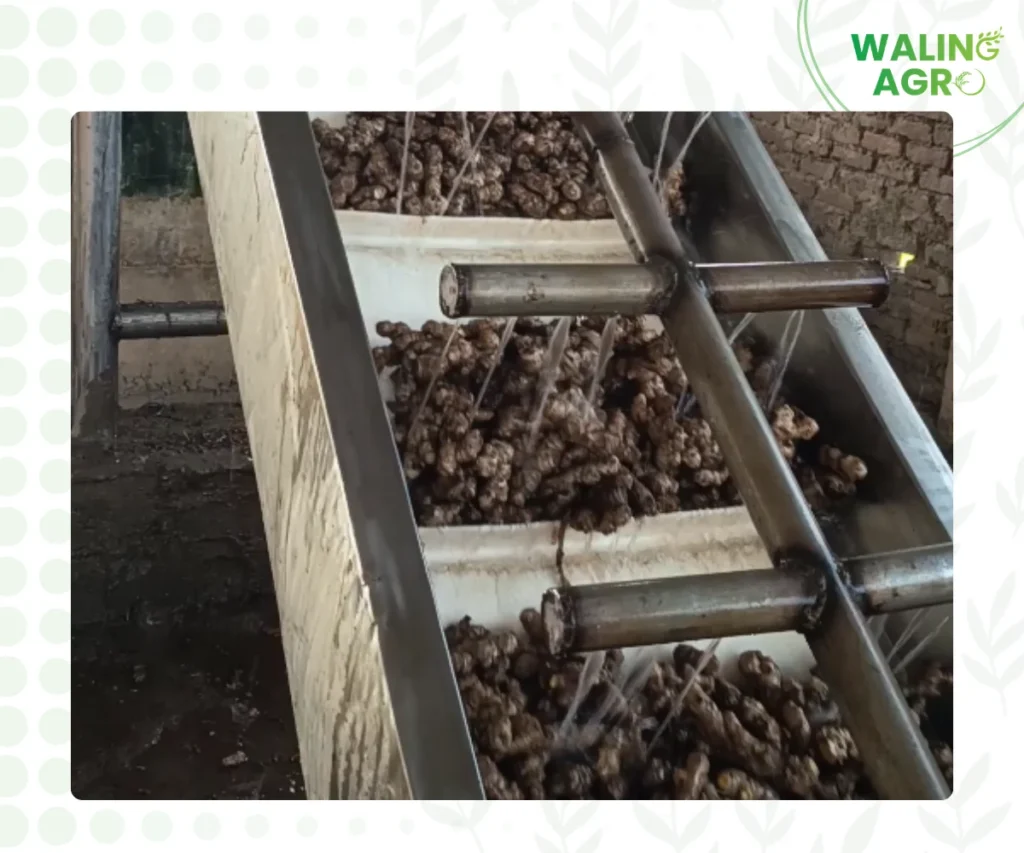
Our washing system operates in three distinct layers:
- Horizontal Washing: The first pass removes loose soil and surface debris
- Vertical Washing: Water jets from above and below clean deeper into the gaps between rhizome fingers
- Circular Washing: A rotating wash cycle reaches remaining crevices and ensures uniform coverage
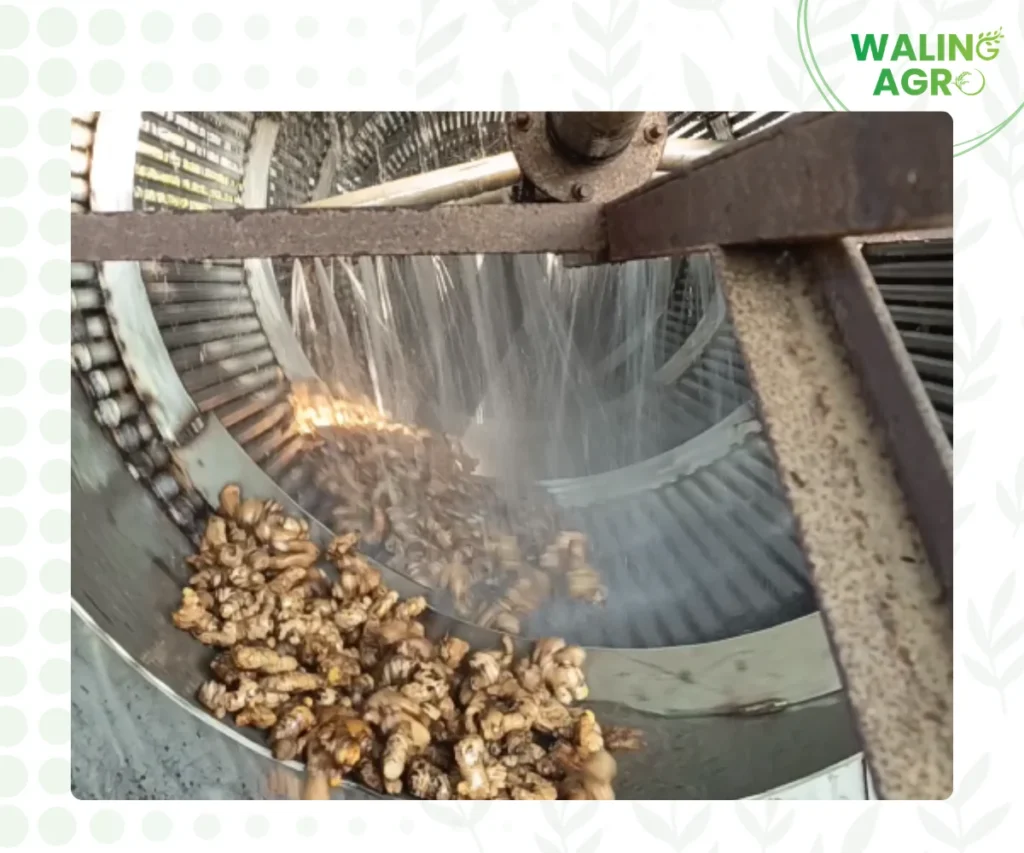
All three stages are fully machine-operated. Our washing machine has a single-batch capacity of 40,000 kg, large enough to process a substantial volume in one cycle. The output of this stage is ginger that is completely clean; no residual soil, ready for the next stage of processing.
Step 5: Surface Drying
Freshly washed ginger comes out of the machine wet. Before it can move further along the production line, it needs to shed that surface water. This stage is simple but important.
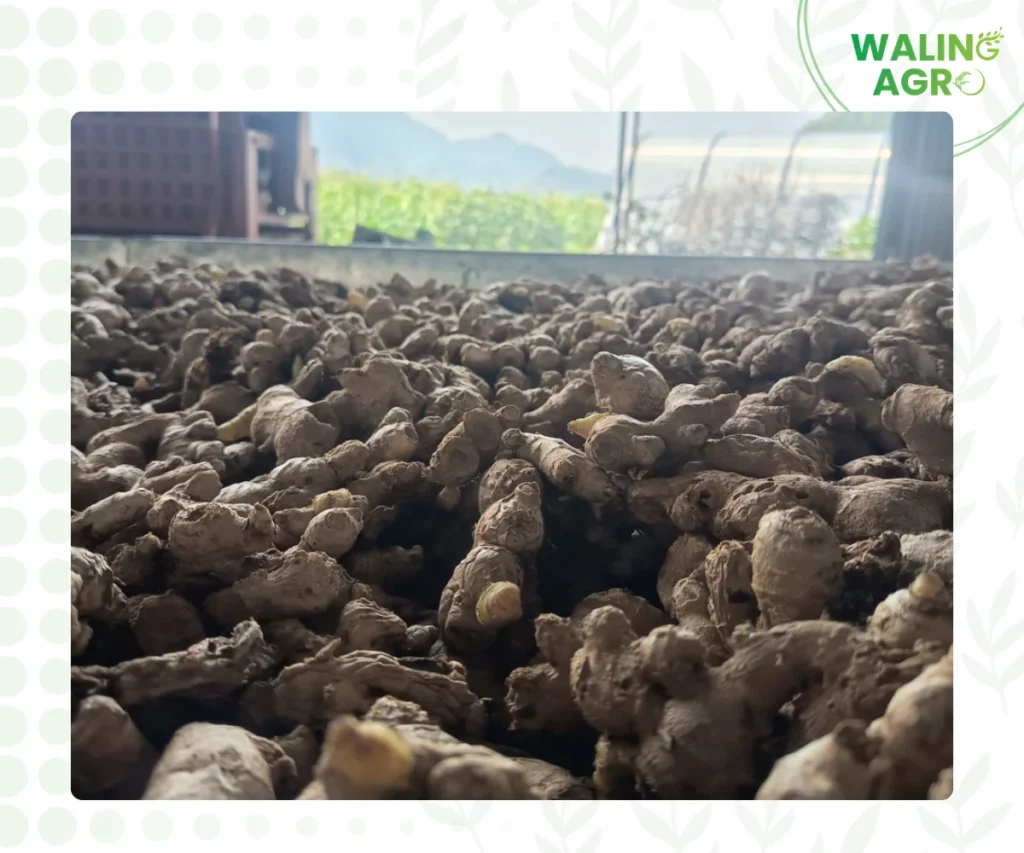
After washing, ginger travels on a conveyor to a collection point at the end of the machine. The machine vibrates continuously at this point, shaking off excess water. The ginger then rests in this area for a couple of hours, air drying naturally in the open air.
This is what we call surface drying,removing the water that clings to the outside of the rhizome, without applying any artificial heat or pressure. Once the ginger has surface-dried, a portion of it is packed directly into netted sacks and sold as fresh washed ginger for vegetable consumption.
Step 6: Smoked Drying
Not all of our ginger becomes powder, a portion undergoes smoke drying. The health benefits of ginger in this form have deep roots in Ayurvedic medicine, and the demand for smoked ginger products remains strong in the Indian market.
After surface drying, selected batches of ginger are transported to our chimney. Here, ginger is dried slowly over a controlled heat and smoke source for an extended period of time.
This is not a process you can hurry. Smoke drying requires experienced operators who understand how to manage temperature, smoke levels, and drying time to produce the right result. Too hot and the ginger loses its nutritional value. Too cool and it does not dry sufficiently.
| Detail | Specification |
| Method | Chimney-based traditional smoke drying |
| Capacity per batch | 500 kg |
| Labour requirement | Highly skilled, experienced operators essential |
| Shelf life of output | More than 2 years without refrigeration |
| Final products | Suthi (hard dried smoked ginger) and Rashi (softer smoked form) |
| Primary market | India, sold via dealers and wholesalers |
| Primary consumers | Postpartum women (new mothers) & traditional Ayurvedic practice |
Step 7: Cutting
All the ginger assigned for powder production now moves to our cutting section. Before it can go into the solar dryers, it needs to be cut into thin, uniform slices. This step is about preparing the ginger in the most effective shape for drying.
When ginger is cut this way, every slice has roughly the same surface area exposed to the warm, circulating air inside the solar dryer. If ginger is dried in large, irregular chunks, the outer layers dry much faster than the inner core. The result is uneven moisture content, which creates problems for grinding and can reduce shelf life.
- Cutting rate: 200 kg per hour via machine
- Machine cutting ensures uniform slice thickness throughout every batch
- Thin, even slices ensure consistent, predictable moisture removal in the solar dryer
- Uniform drying = better grinding = more consistent powder texture
Step 8: Solar Drying
For years, we dried our ginger slices using electric dryers. Electric drying works, it gives precise temperature control and can operate regardless of weather. But it comes at a cost: significant electricity consumption, high running costs, and a carbon footprint that we were not comfortable with.
We decided to look for a better way. Our search led us to design and build solar dryers specifically for agro-processing applications in the Nepali context. We studied, did our research, consulted with food technologists, and made the switch.
Our Solar Dryer Setup
Temperature control inside the solar dryers is not passive. Our team monitors the temperature throughout each drying cycle and makes adjustments as needed. Too high a temperature can damage the aromatic compounds and nutritional content of the ginger. Too low means insufficient moisture removal and a longer drying time.
| Specification | Detail |
| Number of solar dryers | 5 units |
| Capacity per dryer | 500 kg of ginger chips per cycle |
| Total combined capacity | 2,500 kg per drying cycle |
| Minimum temperature | 22°C |
| Maximum temperature | 75°C |
| Temperature control | Closely monitored and adjusted throughout the drying cycle |
Step 9: Grinding
Once the solar-dried ginger chips pass a moisture check, they move to the grinding room. This is where ginger chips become ginger powder.
Grinding sounds straightforward, but there are important details to get right. Moisture content before grinding is the most critical variable. If the chips still hold too much moisture, they will clump together during grinding, produce uneven powder, and potentially damage the machines.
If they are too dry, the grinding process produces excessive heat that can volatilise the aromatic compounds we have worked so hard to preserve.
So before any batch enters the grinder, our team does a quick moisture check. Only batches within the acceptable moisture range proceed to grinding. Batches that are not quite ready go back into the solar dryer for additional time.
- 2 stainless steel, food-grade grinders in operation
- Processing rate is 50 kg per hour
- Moisture check completed on every batch before grinding begins
- Stainless steel construction ensures no contamination and easy cleaning between batches
- Food-grade certification on all grinding equipment
Step 10: Quality Inspection
Quality inspection is the last checkpoint before powder enters the packaging line. Nothing ships from Waling Agro without passing this step.
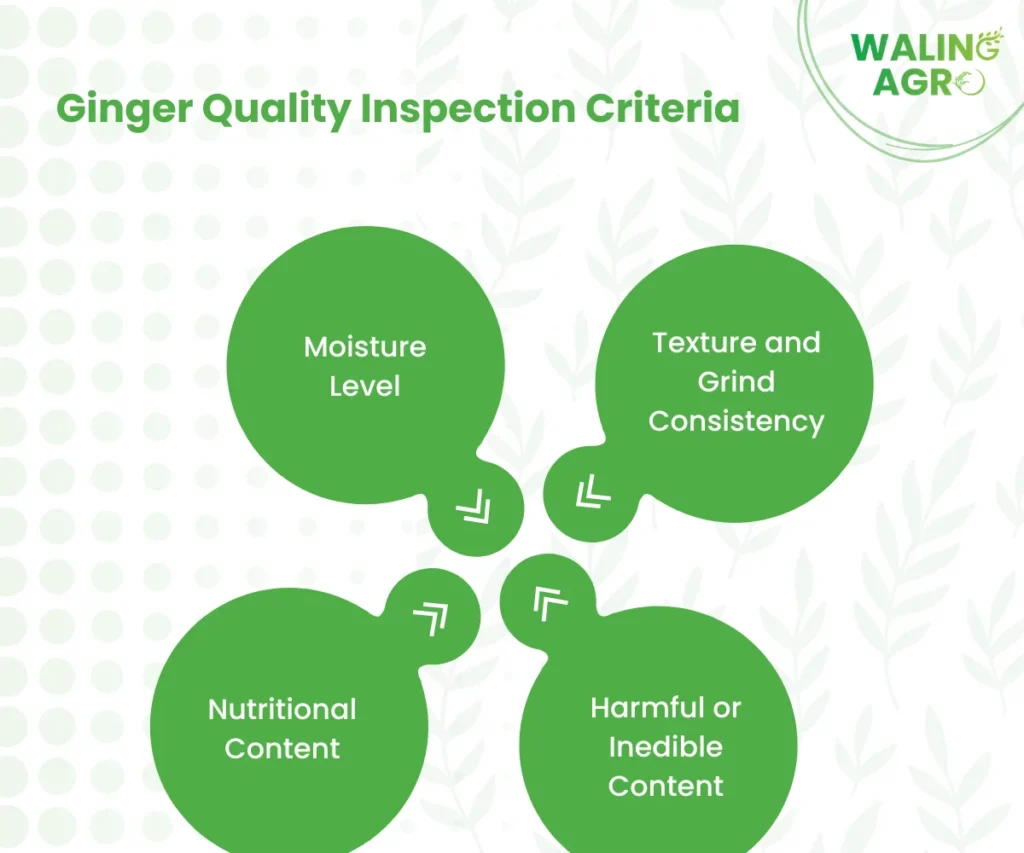
We test every batch against four criteria:
- Harmful or Inedible Content: We test specifically for lead and other heavy metal contamination, which can enter the supply chain through soil, water, or equipment. This is a non-negotiable food safety check.
- Moisture Level: Moisture content above acceptable limits leads to clumping, mould growth, and shortened shelf life. We test every batch and reject any that fall outside our specification.
- Texture and Grind Consistency: The powder should be smooth, fine, and uniform. Coarse particles or clumps indicate an issue with the grinding stage and the batch is reviewed.
- Nutritional Content: We verify that the powder meets the expected nutritional profile; including relevant active compounds, to ensure our customers are getting the product they expect.
Step 11: Packaging
Packaging is the last step, and it is designed carefully around who is buying and how they will use the product.
We supply ginger powder to two very different types of customer: large commercial buyers who need bulk quantities, and end consumers who want retail-sized packs for home use. The packaging format for each is very different.
| Pack Size | Best For | Target Market |
| 25 kg sack | Dealers, wholesalers, food industries | Nepal, India, International |
| 1 kg bag | Households, restaurants, cafes | Chitwan, Kathmandu, Butwal, Pokhara, UK |
| 500 g bag | Regular home cooking | Chitwan, Kathmandu, Butwal, Pokhara, UK |
| 200 g pouch/bag | Moderate home use, gifting | Chitwan, Kathmandu, Butwal, Pokhara, UK |
| 50 g bag | Trying for the first time, small households | Local Nepali market |
Bulk and Commercial Packaging
For dealers, wholesalers, restaurants, food manufacturers, and other businesses buying in volume, we pack ginger powder in 25 kg plastic sacks. Each sack has an inner protective liner that prevents moisture ingress, leakage, and contamination during storage and transport.
- 25 kg plastic sacks with inner protective layer
- Prevents moisture ingress and contamination
- Suitable for long-distance transport and warehousing
- For: dealers, wholesalers, food processing companies, restaurants, bulk buyers
Retail and Consumer Packaging
For individual consumers and retail shops, we offer ginger powder in a range of smaller pack sizes. These packs are designed for convenience, clear labelling, and appropriate portion sizes for household use.
- 200 grams pouch bags, ideal for regular household use
- Plastic bags available in 50 g, 200 g, 500 g, and 1 kg sizes
- Sealed for freshness and shelf life
- For: homes, small restaurants, retail shops, online customers
Where Waling Agri Ginger Powder Goes
We currently supply ginger powder to five markets across Nepal and internationally:
- Chitwan: Our home base and strongest local market. Local retailers, restaurants, and households are our foundation here.
- Kathmandu: Nepal’s capital and the country’s largest consumer market. Urban households, grocery stores, and food businesses buy regularly.
- Butwal: A major trade hub in western Nepal, connecting our products to a wide regional market.
- Pokhara: Nepal’s second city and major tourist destination. Strong demand from both local households and the hospitality sector.
- United Kingdom: Our international export market. Nepali diaspora communities and health-conscious consumers in the UK are increasingly interested in authentic, traceable spices.
Our ginger is grown in the hills and valleys of Gandaki Province. It carries the flavour of Nepali soil, the care of Nepali farming families, and the quality assurance of our factory process.
Ready to Try Waling Agri Ginger Powder?
If you have made it to the end of this blog, you now know more about ginger powder production than most people ever will. You know how it is sourced, washed, dried, ground, tested, and packed. You know the decisions behind each step and the values that shape our process.
The next step is simple: try it for yourself. If you are interested in wholesale or bulk supply, we would love to hear from you, reach out and our team will get back to you promptly.